Exploring Google Bard: The Future of Language GenerationIntroduction

The revolutionary technology google bard


Introduction

Language models have been at the forefront of tTitle: Exploring Google Bard: The Future of Language Generation

Introduction

Language models have been at the forefront of technological advancements in recent years, and Google Bard is the latest addition to this ever-expanding landscape. As of my last knowledge update in September 2021, Google Bard was just emerging onto the scene. In this research blog, we will explore Google Bard and its potential implications for natural language generation and understanding. Please note that there may have been significant developments since then, so it’s essential to verify the most current information regarding Google Bard.

## What is Google Bard?

Google Bard is a language model developed by Google, and it’s often compared to the likes of GPT-3, which gained widespread attention due to its ability to generate human-like text. While my knowledge is based on information available up to September 2021, we can make some educated assumptions about Google Bard’s capabilities.

1. **Scalability**: Like other models in its class, Google Bard is likely to be highly scalable, making it adaptable for various applications, from chatbots to content generation.

2. **Understanding and Generation**: Google Bard, similar to GPT-3, is expected to understand context, generate coherent text, and answer questions to a reasonable extent.

3. **Multilingualism**: Given Google’s expertise in translation, it’s reasonable to assume that Bard might excel in multilingual communication and translation tasks.

4. **Potential Use Cases**: Google Bard could find applications in content creation, chatbots, language translation, text summarization, and more.

## The Evolution of Language Models

To understand Google Bard’s significance, we need to consider the evolution of language models. We started with basic rule-based systems, moved on to statistical models, and eventually entered the era of deep learning, where models like GPT-3 made significant strides. Google Bard represents a step further in this evolution, potentially promising improvements in both text generation and understanding.

## Ethical and Societal Considerations

While the advancements in language models like Google Bard are exciting, they also raise important ethical and societal concerns. These models can be used to generate highly convincing fake content, potentially exacerbating issues related to misinformation, deepfakes, and online fraud. It is crucial to strike a balance between technological progress and responsible usage.

## The Future of Communication and Content Generation

Google Bard hints at the possibility of more natural and interactive interactions with machines. Whether it’s customer support chatbots, content creation, or personal virtual assistants, the improved capabilities of such models can enhance user experiences across various domains.

## Conclusion

Google Bard, in the context of my last knowledge update in September 2021, represents another milestone in the field of language models. As with any rapidly evolving technology, it’s essential to keep track of the latest developments, applications, and ethical considerations associated with Google Bard. Its potential to revolutionize natural language generation and understanding is exciting, but it also necessitates responsible usage and ethical considerations. We look forward to witnessing how Google Bard and similar language models shape the future of communication and content generation.

Please note that the information provided here is based on my last knowledge update, and significant advancements or changes may have occurred since then. It’s advisable to refer to the most recent sources for the latest information on Google Bard.echnological advancements in recent years, and Google Bard is the latest addition to this ever-expanding landscape. As of my last knowledge update in September 2021, Google Bard was just emerging onto the scene. In this research blog, we will explore Google Bard and its potential implications for natural language generation and understanding. Please note that there may have been significant developments since then, so it’s essential to verify the most current information regarding Google Bard.

## What is Google Bard?

Google Bard is a language model developed by Google, and it’s often compared to the likes of GPT-3, which gained widespread attention due to its ability to generate human-like text. While my knowledge is based on information available up to September 2021, we can make some educated assumptions about Google Bard’s capabilities.

1. **Scalability**: Like other models in its class, Google Bard is likely to be highly scalable, making it adaptable for various applications, from chatbots to content generation.

2. **Understanding and Generation**: Google Bard, similar to GPT-3, is expected to understand context, generate coherent text, and answer questions to a reasonable extent.

3. **Multilingualism**: Given Google’s expertise in translation, it’s reasonable to assume that Bard might excel in multilingual communication and translation tasks.

4. **Potential Use Cases**: Google Bard could find applications in content creation, chatbots, language translation, text summarization, and more.

## The Evolution of Language Models

To understand Google Bard’s significance, we need to consider the evolution of language models. We started with basic rule-based systems, moved on to statistical models, and eventually entered the era of deep learning, where models like GPT-3 made significant strides. Google Bard represents a step further in this evolution, potentially promising improvements in both text generation and understanding.

## Ethical and Societal Considerations

While the advancements in language models like Google Bard are exciting, they also raise important ethical and societal concerns. These models can be used to generate highly convincing fake content, potentially exacerbating issues related to misinformation, deepfakes, and online fraud. It is crucial to strike a balance between technological progress and responsible usage.

## The Future of Communication and Content Generation

Google Bard hints at the possibility of more natural and interactive interactions with machines. Whether it’s customer support chatbots, content creation, or personal virtual assistants, the improved capabilities of such models can enhance user experiences across various domains.

## Conclusion

Google Bard, in the context of my last knowledge update in September 2021, represents another milestone in the field of language models. As with any rapidly evolving technology, it’s essential to keep track of the latest developments, applications, and ethical considerations associated with Google Bard. Its potential to revolutionize natural language generation and understanding is exciting, but it also necessitates responsible usage and ethical considerations. We look forward to witnessing how Google Bard and similar language models shape the future of communication and content generation.

Please note that the information provided here is based on my last knowledge update, and significant advancements or changes may have occurred since then. It’s advisable to refer to the most recent sources for the latest information on Google Bard.
Title:Exploring the Creative Power of Leonardo AI Image Generator

Leonardo AI the revolutionary technology


In the ever-evolving landscape of artificial intelligence, one remarkable innovation that has captured the imagination of both artists and tech enthusiasts is the Leonardo AI Image Generator. Developed by OpenAI, this cutting-edge tool has transformed the way we create and appreciate digital art. In this blog, we will delve into the fascinating world of Leonardo AI Image Generator, exploring its capabilities, applications, and the impact it has had on the creative industry.

### Unveiling Leonardo AI

Leonardo AI is an AI-powered image generator that combines the power of deep learning with a vast repository of human-made art to generate striking and original pieces of artwork. The name itself is an homage to the renowned artist and inventor, Leonardo da Vinci, whose innovative spirit and creativity the tool seeks to emulate.

### How Leonardo AI Works

Leonardo AI’s magic lies in its ability to generate unique artworks based on user input. It starts with a simple textual description, and from there, the AI leverages a wide range of artistic styles and references to bring the concept to life. This process is made possible through a type of AI model called a GAN (Generative Adversarial Network), which essentially pits two neural networks against each other, one generating images and the other evaluating them for realism.

### The Creative Process

To use Leonardo AI, one only needs to describe the desired artwork in text. For instance, you could request, “A serene mountain landscape at sunset,” and the AI responds by generating an image that matches your description. Users can fine-tune the generated image by providing feedback and making adjustments, creating a collaborative artistic process between human and machine.

### Applications of Leonardo AI

The possibilities of Leonardo AI Image Generator are as vast as the realm of art itself. Here are some of the key applications:

1. **Artistic Inspiration:** Artists, both amateur and professional, can use Leonardo AI to spark their creative ideas, providing a visual reference to inspire their work.

2. **Content Creation:** Content creators can use it to generate eye-catching visuals for their websites, social media, or marketing materials.

3. **Educational Tool:** Teachers and students can utilize Leonardo AI to better understand art history and different artistic styles by generating examples.

4. **Concept Visualization:** Designers and architects can use it to quickly visualize design concepts and architectural renderings.

5. **Storyboarding:** Filmmakers and storytellers can create visual storyboards to plan their projects more effectively.

6. **Meme and Humor Generation:** It’s also a fun tool for creating memes and humorous images, making it popular in internet culture.

### The Impact on the Creative Industry

Leonardo AI Image Generator has had a profound impact on the creative industry. It blurs the lines between human and machine creativity, opening new possibilities for artists, designers, and storytellers. However, it also sparks discussions about the role of AI in art and raises questions about authorship and creativity in the digital age.

As AI technology continues to advance, it’s crucial to explore the ethical implications and boundaries of AI-generated art. How do we credit AI for its role in creation? How do we ensure that artists’ and creators’ rights are protected?

In conclusion, Leonardo AI Image Generator is a powerful and exciting tool that showcases the incredible potential of artificial intelligence in the world of art and creativity. It empowers individuals to collaborate with AI, exploring new horizons and pushing the boundaries of what’s possible in the creative space. While there are still many questions to be answered about the future of AI-generated art, there’s no doubt that Leonardo AI has already left an indelible mark on the art world.

The Metaverse and Virtual Reality: Where Reality Meets the Digital Frontier

Metaverse the revolutionary technology


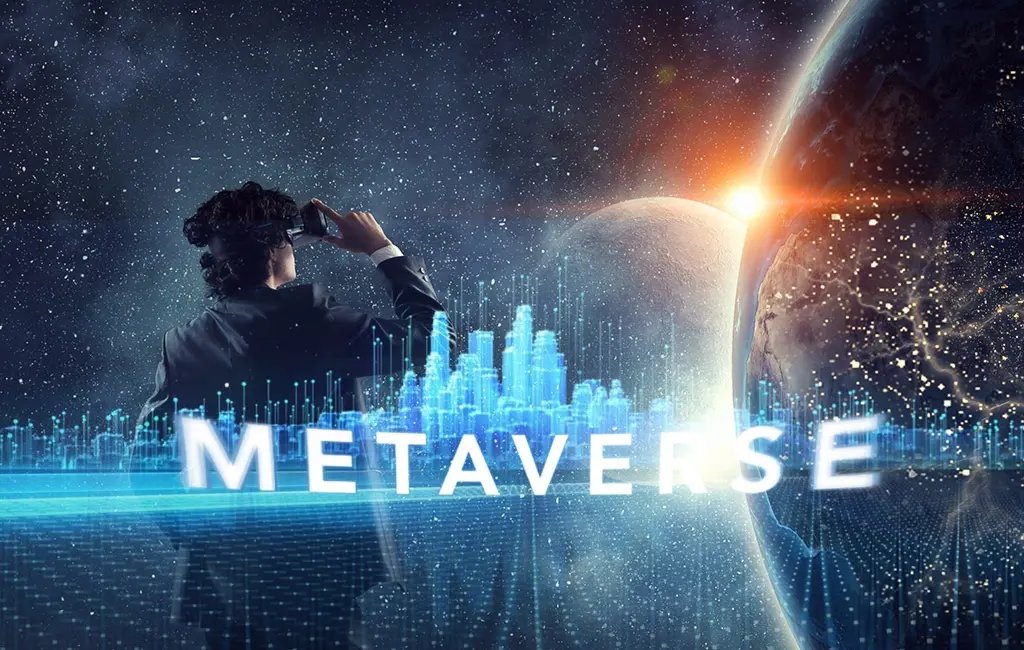
The concept of the metaverse, a digital universe where people interact, create, and experience a parallel digital reality, has been captivating our imaginations for years. With the rapid advancements in virtual reality (VR) and augmented reality (AR), the idea of the metaverse is no longer confined to science fiction; it’s becoming a tangible reality.

Metaverse: The Digital Frontier

The metaverse, often described as a convergence of physical and digital realities, is a space where users can immerse themselves in a shared, 3D digital environment. It goes beyond traditional online spaces, offering a seamless blend of augmented reality, virtual reality, and the physical world.

Virtual Reality: The Gateway to the Metaverse

Virtual reality plays a pivotal role in building the metaverse. VR headsets transport users to immersive digital environments, allowing them to interact with others and their surroundings. The metaverse takes VR to a new level by creating interconnected virtual spaces and ecosystems.

Applications of the Metaverse and Virtual Reality

1. **Social Interaction**: The metaverse redefines how we connect with others. Users can meet in virtual spaces, attend events, and interact with avatars, creating a profound sense of presence.

2. **Gaming and Entertainment**: Virtual reality gaming has taken off, providing gamers with experiences previously unimaginable. The metaverse enhances this by creating persistent, interconnected virtual worlds.

3. **Education and Training**: Virtual reality-based education and training are transforming learning. In the metaverse, education can be experiential, allowing students to explore historical events, science, and more.

4. **Work and Collaboration**: The metaverse has the potential to revolutionize remote work and collaboration. Imagine virtual offices, board meetings, and co-working spaces, all within a digital universe.

5. **Economic Opportunities**: Just as the internet created a new economy, the metaverse offers business opportunities. Virtual real estate, digital assets, and virtual goods are already emerging as lucrative markets.

Challenges and Considerations

As exciting as the metaverse and virtual reality are, they come with their own set of challenges. Privacy, security, and digital addiction are key concerns. Additionally, the digital divide may further exacerbate inequalities, making accessibility a significant issue.

The future awaits


The Future Awaits

The metaverse and virtual reality are on the cusp of transforming the way we live, work, and play. It’s a realm where creativity knows no bounds and where the line between the real and the digital blurs. As technology continues to advance, we can only imagine the limitless possibilities that the metaverse holds.

In conclusion, the metaverse and virtual reality are more than just emerging technologies; they represent a paradigm shift in the way we experience the world. They have the potential to reshape industries, foster innovation, and connect people in unprecedented ways. While challenges remain, the journey into the metaverse is an exhilarating one, where the future is limited only by our imagination.

TESLA SMART SOFTWARE

Tesla smart software

Title: The Tesla Functional Software System: Revolutionizing the Driving Experience

Introduction:
The automotive industry is undergoing a transformative shift towards electrification and automation, and at the forefront of this revolution stands Tesla. Beyond electric vehicles (EVs), one of Tesla’s defining features is its cutting-edge software system, which continually enhances the functionality and user experience of its vehicles. In this blog, we’ll explore the Tesla functional software system, its innovative features, and its impact on the automotive landscape.

Section 1: Over-the-Air (OTA) Updates
Tesla is a pioneer in the automotive world for its seamless implementation of over-the-air software updates. Unlike traditional automakers, Tesla can remotely update and improve its vehicles’ software, much like your smartphone or computer. Key points to discuss in this section include:

1. **Constant Improvement**: Tesla owners benefit from regular software updates that not only fix bugs but also introduce new features and performance enhancements.

2. **Safety and Autonomy**: OTA updates enable Tesla to roll out critical safety features and advancements in autonomous driving capabilities, enhancing the overall driving experience.

Section 2: Autopilot and Full Self-Driving (FSD)
Tesla’s Autopilot and Full Self-Driving features are powered by sophisticated software algorithms. Discuss the following aspects:

1. **Autopilot**: Explain how Autopilot provides advanced driver-assistance features, including adaptive cruise control, lane-keeping, and automatic lane changes.

2. **Full Self-Driving**: Explore the capabilities and potential of Tesla’s Full Self-Driving package, including features like Navigate on Autopilot, Smart Summon, and the promise of fully autonomous driving in the future.

Section 3: Infotainment and Connectivity
Tesla’s infotainment system is known for its user-friendly interface and connectivity options. Cover the following:

1. **Large Touchscreen**: Describe Tesla’s large central touchscreen, which controls various vehicle functions, and how it provides access to entertainment, navigation, and vehicle settings.

2. **Tesla Theater**: Discuss the entertainment features, including streaming services, games, and web browsing available on the infotainment system.

Section 4: Energy Management
Tesla’s software extends beyond the driving experience to energy management. Explore the software’s role in:

1. **Battery Management**: Explain how Tesla’s software optimizes battery performance, extending the life of the battery pack.

2. **Energy Efficiency**: Discuss how the software system helps maximize energy efficiency, leading to longer range and faster charging.

Section 5: User Experience and Customization
Tesla vehicles are known for their user-friendly interfaces and customizable settings. Discuss:

1. **User Profiles**: Explain how Tesla allows multiple user profiles, including personalized settings for seats, mirrors, and climate control.

2. **Sentry Mode and Dashcam**: Highlight Tesla’s security features, such as Sentry Mode and the built-in dashcam, which enhance vehicle safety.

Conclusion:
The Tesla functional software system is a testament to the company’s commitment to innovation. It continuously evolves and improves, enhancing the driving experience, safety, and performance of Tesla vehicles. As the automotive industry embraces electric and autonomous technology, Tesla’s software-driven approach puts it in a unique position to lead the way into the future of transportation.

In the world of automobiles, where hardware used to be king, Tesla’s software-first philosophy is setting new standards and reshaping the future of driving. With each OTA update, Tesla owners experience the thrill of owning a vehicle that gets better over time. As technology advances, we can only anticipate more groundbreaking features and capabilities from this trailblazing automaker.

New Technology topics blogs are coming soon (click on this article)

Do you see yourself as a leader?

Certainly, here are some technology news headlines and summaries for your site visitors:

  1. Apple Unveils Latest iPhone Model: Apple recently announced its newest iPhone model, featuring enhanced performance, camera upgrades, and longer battery life. Tech enthusiasts are eagerly anticipating its release.
  2. Tesla’s Self-Driving Software Update: Tesla continues to make strides in autonomous driving technology, with the release of a major software update that brings advanced self-driving capabilities to their vehicles.
  3. Google’s Quantum Computing Breakthrough: Google made headlines with its quantum computing milestone, achieving “quantum supremacy.” This development could have far-reaching implications for cryptography, materials science, and more.
  4. SpaceX’s Ambitious Mars Mission: SpaceX, led by Elon Musk, is making progress toward its goal of sending humans to Mars. The company recently completed a successful crewed mission to the International Space Station, bringing us one step closer to interplanetary travel.
  5. 5G Network Expansion: 5G network deployment continues to expand globally, promising faster internet speeds and improved connectivity. Many countries are investing heavily in this technology.
  6. Cybersecurity Concerns: With the rise in cyberattacks and data breaches, cybersecurity remains a top concern. Companies and individuals are increasingly focused on protecting their digital assets.
  7. AI Advancements: Artificial intelligence continues to advance, with applications ranging from healthcare diagnostics to autonomous vehicles. Researchers are pushing the boundaries of what AI can achieve.
  8. Environmental Tech Innovations: Sustainable technology solutions are gaining traction, with developments in renewable energy, electric vehicles, and eco-friendly materials being of particular interest.
  9. Smart Home Integration: Smart home devices are becoming more prevalent, offering convenience and automation. Integration with virtual assistants like Amazon Alexa and Google Assistant is on the rise.
  10. Blockchain and Cryptocurrency Updates: The world of blockchain and cryptocurrency is ever-evolving. News related to new coins, regulations, and blockchain applications is of interest to many tech enthusiasts.

Feel free to expand on any of these topics or let me know if you need more specific details for your site visitors.

Accurate info to use chatGPT

To use ChatGPT effectively for accurate information:

  1. Ask Clear Questions: Frame your questions clearly and concisely to get accurate answers.
  2. Verify Information: Cross-reference the information provided by ChatGPT with reliable sources to ensure accuracy.
  3. Be Specific: If you’re looking for specific details, provide context and specify the type of information you need.
  4. Use Follow-up Questions: If an initial response is vague, ask follow-up questions to clarify and gather more accurate information.
  5. Avoid Speculation: Ask for factual information rather than speculative or subjective opinions.
  6. Understand Limitations: Remember that ChatGPT’s knowledge is up to September 2021, so it might not have the most recent information.
  7. Critical Thinking: Apply critical thinking skills to evaluate the provided information for consistency and reliability.
  8. Human Oversight: Maintain a level of skepticism and don’t solely rely on ChatGPT; consider consulting experts or trusted sources for crucial information.

Remember, while ChatGPT strives for accuracy, it’s always important to verify information from multiple sources for important decisions.

Design a site like this with WordPress.com
Get started